Showing posts with label nature photography. Show all posts

7/31/11

Challenge Complete!

I had to rent some wheels this time - my own bike was out of
commission. A part is on order...
The Naturalism on Speed Challenge is complete! I left for vacation last weekend just two species short of my goal of 100. The five new species I was able to add while cruising Highway 12 on the Outer Banks fell short of my lofty ambitions for the trip (after all, it's a completely different environment) but were more than enough to put me over the top. The new additions are not likely to be seen in the DC suburbs (though I have seen laughing gulls this far inland). While that makes them a little off-topic for the blog they're well within the rules of the challenge. Speaking of rules, I'll recap. The basic premise is to identify species from a moving bicycle. To keep this different from simply identifying wildlife in general, I imposed the following five restrictions:

  1. Listed species must be identified to species while riding, with certainty. 
  2. No unnatural stops are permitted. 
  3. Retroactive identification is also not permitted. 
  4. Domesticated animals (and humans) do not count. 
  5. Plants which grow at my apartment complex or other very familiar areas (my workplace, my parents' house, etc) are ineligible.


Species #99 - Laughing Gull (Leucophaeus atricilla)

Species # 100 - Sea Oats (Uniola paniculata)


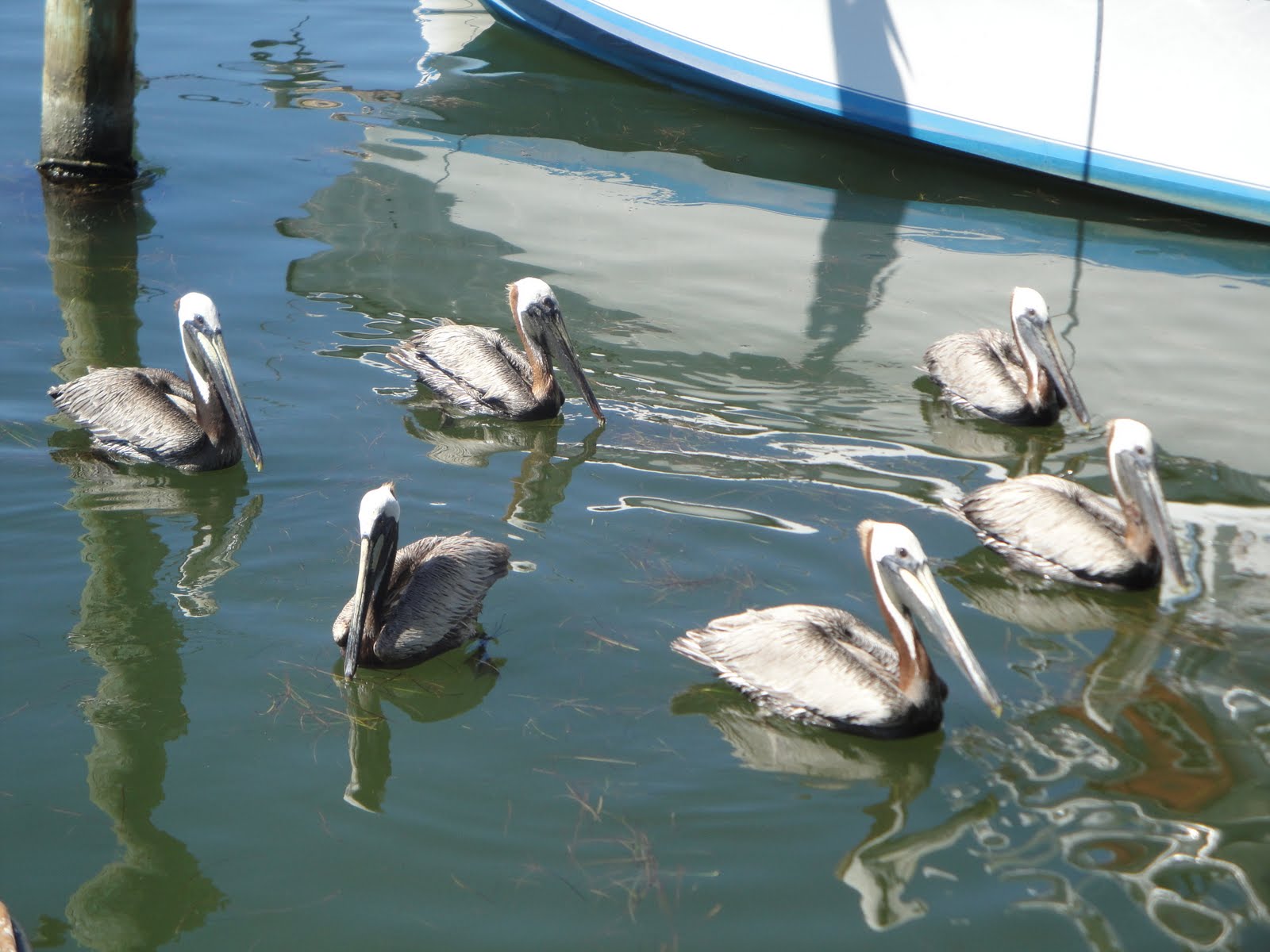
Species # 101 - Brown Pelican (Pelecanus occidentalis)


Species # 102 - Adam's needle (Yucca filamentosa)

 Not pictured: Species # 103 - American beachgrass (Ammophila breviligulata)

This brings me to a final count of 103 species: 58 plants, 23 birds, 11 mammals, 5 fungi, 4 insects, and 2 reptiles. "Final" is a bit of a lie, because I do intend to keep adding to this list as I continue to cycle and to explore the natural world. The marriage of  these two hobbies has been too great an experience to discontinue simply because I reached an arbitrary milestone.

5/8/11

Species Feature #5, Mayapple

The mayapple is nearly ubiquitous spring ground cover in the woods of the Mid-Atlantic. I have noticed it so much this year that it seemed to be just screaming for a feature in this blog. The leaf and the flower are both pretty distinctive, so this is an easy species to identify. The fruit is a green oval that develops from the flower site. They are usually found in large groups, with individual plants liked by rhizomes (connecting root structures). Those rhizomes have been used for chemotherapy and as a topical agent, but eating them (or the fruit) is not recommended. These parts of the plant are poisonous, but only in large quantities.

A sizable cluster of mayapple found in Watkins Regional Park last weekend.

Podophyllum peltatum Quick Facts


Common Name(s): mayapple, hogapple, Indian apple, mayflower, umbrella plant, wild mandrake

Taxonomic Breakdown:

  • Kingdom - Plantae
  • *Division - Magnoliophyta (aka Angiospermae)
  • Class - Magnoliopsida
  • Order - Ranunculales
  • Family - Berberidaceae
  • Genus - Podophyllum
  • Species - peltatum

*For some reason that doesn't make much sense to me, biologists scoff at the term "phylum" for plants. Instead, between Kingdom and Class they split plants into "Divisions." This division is better known as "flowering plants" which are a subset of "seed-bearing plants (Spermatophytes). Why we don't just refer to these levels as phyla and subphyla is beyond me, but hey, I don't make the rules.

Range: Throughout the eastern US as far west as Minnesota and Texas, and North into Canada in places.

Some younger specimens near Rock Creek Park.

Here is an interesting read on the medicinal history and folklore of the mayapple. This site has a wonderful detail photo of the flower, as well as some good information. As the "mandrake" this plant makes an appearance in Shakespeare (see the quote at the top of the first link).

The flower of Podophyllum peltatum.


For variety's sake, a photo from below of mayapple growing by the roadside.

5/1/11

Today's Outing: Watkins Regional Park

I thought about titling this post "Today's Adventure" for my own nostalgic reasons. In any case, adventure it was for a lover of the outdoors. It was an overcast but rainless day that saw us hiking through Watkins Regional Park. This place seems underused to me - it's relatively small but has a lot to offer, both in terms of facilities and hiking trails (although, their trail map and blazing is suspect). Laurel and I have visited three times but never encountered many people. Prince George's County has some negative associations for a lot of area residents, but this place is a true gem. The Nature Center is filled with rescue animals including hawks, owls, and turtles. They also host non-native species - which might be confusing to youngsters. Among their various terraria are a ball python, an emperor scorpion, Madagascar hissing cockroaches, and other exotics. In another part of the park they keep peafowl (yes, that's the word - 'cock' and 'hen' are sex specific, after all). Two of our three trips to this park have been wonderful; the third was unfortunately cut short by unexpected and intense rain. Today was something of a makeup trip for our previous, aborted hike.

Laurel checks out some of the park's rescue birds, located behind the nature center. These enclosures house a turkey vulture, a black vulture, a barred owl, and a pair of red-tailed hawks. Inside were several additional birds of prey native to the region.

Also behind the nature center is this frog pond, which held my attention for a solid ten minutes at least. If you've got a good eye, you'll be able to spot three frogs in this shot. I believe most, if not all, frogs in this pond are green frogs (Lithobates clamitans).


Why depart from a good theme? Also behind the nature center are several birdfeeders. I was able to grab a snapshot of this American goldfinch (Spinus tristis) but the downy woodpecker and white-breasted nuthatch on the neighboring feeder were too quick for me.

My last photo from "behind the nature center," I promise. A closer picture of the frog in question. I am basing my identification as a green frog on the presence, and relative straightness, of a dorsolateral fold.

To move on from all this nature center talk, I'll discuss the day's mushrooming. I didn't bring home anything for the table, but I did see several LBMs (little brown mushroom - I didn't just make this one up), a number of sizable Dryad's saddles, and your typical assortment of polypores. One of these I brought home to identify, but I'm not there yet.

Here are a few of those LBMs I mentioned. There were quite a few of these nestled among the moss, but they were very easy to overlook. Once Laurel pointed the first out, they seemed to rise up out of the ground and sing all around us.

Dryad's saddle is such a photogenic mushroom. Unfortunately, the taste is a bit odd to me, and once they are large enough to be showy the taste is reportedly not very good even to those who generally like it.

I had to push through vines and ford a small stream for this photo, but I think it was worth it. It was my first legitimate tromp through the woods of the year.

I don't know precisely what these polypores are, but I thought they made for a quaint photograph. This tree was just between the park and a private backyard.

There's also a secluded beaver pond on the property. While we didn't spot the craftsmen themselves, evidence of their presence was abundant. I noted the growth atop the lodge we had seen in the fall of 2009, along with a surprise (more on that below). I think the beavers may have moved on to another part of the pond. Their work was still pretty neat to observe.

The pond

The beaver lodge - complete with nesting Canada goose! That's her about bottom center. I have to believe this lodge has been abandoned by the beavers, because I don't see mother goose here as comfortable sharing with a fairly large mammal with enormous teeth.

Here's a better shot of our dedicated mother. Camera zoom did much better than our naked eyes.

I will leave you with this landscape of one of the park's big empty fields. I hope you have enjoyed your vicarious trip to Watkins Regional Park. I can't promise not to drag you there again soon.

4/28/11

New Old Camera!

This is a little bit of a cheating post. I do have a mushroom to share, but I don't yet know what it is. I'm cheating because my new camera arrived today. It's the same model I'd been using, so I won't be able to snap the kind of insect and other small being photos I dream of, but at least I will have current photos to choose from here. I paused along Beach Drive on the way home from work today - I needed a mushrooming fix, and I have heard tell that morels are out in force (though I may have missed the window).

This afternoon I encountered several RAPs (Random Anonymous Polypores) and several specimens of THAT mushroom. "THAT" mushroom is one that I have been encountering since I began the hobby...it appears early in the season and lasts for several months. It has absolutely generic features, and it completely defies identification. I also found the interesting Boletinoid mushroom I will show below (which eerily resembles THAT mushroom except that it has pores instead of gills).

Enjoy this obligatory new-camera closeup of Franklin. "Lookit that punum" says the stereotypical zany aunt.
The underside of the mushroom I brought home. It has white pores which run down the stem, and it grows from rotting wood.
It has a mottled brown cap, and its patterning is reminiscent of dryad's saddle...though this is certainly not the usual form one would expect of that particular fungus.
It has white flesh which does not stain upon bruising upon exposure. There is also an indentation at the center of the cap, the term for which escapes me. It's called an "umbo" if it's convex instead of concave...
There is no annulus present, and it seems to have no veils either. I now need to wait for a spore print and consult my guides. If I ID this thing, I will update.


This is one of the first photos I took with the new camera. I didn't know what I was doing with all the settings, so it came out in this odd aspect ratio because of my zoom.  In any case, the photo is meant to display the distinctive marbled, flaky bark of the American sycamore. There wasn't a whole lot going on this evening around my apartment, so I had to look to the trees. Fitting, I suppose, since tomorrow is Arbor Day.

Well, like I said, this is a bit of a cheat. G'night folks!

4/23/11

The Naturalist's Toolbox

Stephen King, whose work I admire, likes to talk about his "toolbox" when discussing the craft of writing. Other writers (and others in almost any field of work or serious hobby) use this concept, of course, but King is the one who really introduced me to it in its more abstract sense. I'll cover the naturalist's toolbox in both ephemeral and concrete terms below.

What do you need to be a good naturalist? Well, if you ask me it's the ephemeral stuff that's important. Stripped to its most basic essentials, the naturalist's toolbox contains:
  • Eyes
  • Keen observational skills
  • Patience
  • Interest in nature
  • Clothing (you will, after all, be outside)
To the last bullet on the list, I will add that there is probably such a thing as "nude naturalism," but I'm talking about how to be a naturalist and retain a sane outward appearance. Really, though, anyone can be a naturalist with just those five things. The gear and gadgetry I will lay out below will certainly make outdoor experiences more enjoyable and rewarding, but since none of these things are hard and fast requirements nature hobbies can be as frugal or as expensive as your budget allows.

There is of course a lot of variation in useful items depending upon your particular area(s) of interest. Following which things are best for which interests isn't rocket science, though, so I'll try not to lead you by the nose.


Hiking Essentials

Just about every outdoor adventure will involve some amount of walking, so I'll start there. The equipment list for this is pretty basic. For any significant hike, you will need:
  • Hiking boots - preferably waterproofed or at least water resistant
  • Comfortable socks
  • Layers of clothing (obviously, your hiking wardrobe will vary seasonally)
  • A poncho
  • A map and compass for any hike where becoming lost is even a remote possibility
  • water - I recommend those steel, screw-top bottles (preferably with carabiners)
  • Trail food
  • First-aid kit
  • A backpack or similar carryall device

Useful, but not absolute must-have, items include:

  • Bug spray
  • sunscreen (this IS a must have in some environments)
  • A pocket knife or leatherman tool
  • A flashlight (necessary, of course, if your hike will be at night)
  • Extra carabiners (you will be surprised how many ways these can help you out)

Everything else you might want is really up to the hiker's discretion. Some folks love to have cell phones or GPS equipment; others prefer a much more off-the-grid approach.


Observational Aides

There are really only two items (three if you're a stargazer) that fall into this category, but they are important enough that I thought they deserved their own bolded and underlined subheading. I'm going to skip that third option, but I do have a few brief words to share on binoculars and cameras.

Binoculars are great to have when you want them. If you're a birder, they are all but necessary. However, in my experience they have often been a clunky and heavy extra burden. The secret with this tool is to know when to bring it along, and when to write off the more distant sightings as something for another trip. Binocs are available at widely ranging prices, but I wouldn't recommend the super-cheap or the super-expensive. If you don't want to spend at least $50, then the naked eye approach is probably adequate.

Cameras are also available across a broad spectrum of cost and quality. In this case, the super-cheap just might be OK, depending on what you want to photograph. If mushrooms or plants are your passion, then you can get away with a fairly low-quality model that won't break the bank. I'll illustrate below:

This was taken with the low-quality camera I've been stuck with for the last few weeks. It might not be exemplary, but it gets the point across.
However, if insects, spiders, or other tiny creatures are your cup of tea, a more advanced model with a robust zoom lens is going to be necessary. Consider the botched attempt below, taken with a reasonably good digital camera:

Yuck, right? This was the best of about a half-dozen attempts made before a resigned sigh.
This was a slightly more successful effort with the same equipment. Still, if I were to take up entomology instead of mycology as a primary focus, I'd clearly need something better.
The other problem is that animals, well, they move. If your subject of choice is quick and wily, you'll need a camera with great shutter speed. If fishes or other underwater life thrill you, then you'll need an underwater camera and a host of other materials which fall outside my range of experience. The takeaway from all this is to remember what your goal is when you're camera shopping - this way you can avoid overkill on the one hand and inflated expectations a point-and-shoot model on the other.


Literature

There are a wealth of resources available for the aspiring naturalist. The internet is a pretty good place to start, although if you're reading my blog I suppose you've figured that much out already. Believe it or not, Wikipedia is a pretty good resource if you have an idea of the common name of what you're looking for. Quite a number of universities keep detailed sites - often with information not yet published elsewhere. National and State Parks, wildlife and nature preserves, and other similar places often feature useful lists of native species on their websites. Googling something like "funny-looking green beetle" can actually yield surprisingly helpful results on occasion, as well. However, the internet is not quite perfect for the confused and frustrated outdoorsman.

Sometimes you might want to identify something for which you have no search terms to even try - you just need to start with pictures. In that case, you need guidebooks. The below snapshots will give you an idea what I'm talking about.

You'll notice I have four mushroom guides, but only one for any other single topic. This is simply because of the added complexity of mushroom identification. Sometimes it is important to verify your result with a second guide that emphasizes slightly different features.
 As you can see, I'm partial to Audubon guides. Their color plates are simply unmatched. Sibley is another well-respected and quite good publisher. My bird guide (see below) is from Stokes. I am personally not a fan of Petersenor Simon and Schuster guides, but these options work for some. As a child, I couldn't get enough of the Golden Guides, and I highly recommend these for anyone ages 8-10 through high school age.

The Weather Field Guide hasn't been as useful as I'd hoped, but it is interesting. At the far right you can see I've kept my Boy Scout Handbook, just in case. I still suck at tying knots without a reference, so I confess to using it once or twice in adulthood.
The other type of guide worth noting is the hike guide. You can find these for just about any region, and for this area I highly recommend the 60 Hikes Within 60 Miles guidebook. This series has entries for places as widespread as San Francisco, Atlanta, Cincinnati, Phoenix, and Portland. Avid hikers living close to DC should consider owning just about any hike guide with Shenandoah National Park in the title, as well.

Finally, I should discuss magazines. From publications like Science and Nature to more specifics (I get a quarterly pub simply called Mushroom) these can be an excellent way to learn things that are simply too detailed to be covered in the guides. You are also getting a more varied perspective, since the guidebooks tend to have a single author, or at most a small team of authors. I'm somewhat surprised at the volume of periodicals that remain out there in the internet age, but if you have thought of it there is probably a magazine devoted to it.

I'm sure I haven't blown too many people away with information here, but I hope there's a takeaway or two here. What I'm really driving at is that nature-lovers can start a full-fledged hobby with very little outlay of money - and yet, for those who want to be well equipped the resources to aid you are virtually limitless.