Showing posts with label Naturalism on speed. Show all posts

3/21/12

Naturalism on Speed: Challenge 2

Welcome back to the silliest feature of my blog, the Naturalism on Speed Challenge. Last year I challenged myself to identify 50 species before the CASA River Century and another fifty by the end of the year. This time I'm going for fifty more, for a grand total of 153. I expect this one to be much harder because so many of the most familiar species are eliminated. Further, since there are only so many terrestrial animals likely to show themselves I will be primarily identifying plants (outside my wheelhouse) and squinting at birds (which move as quickly as I do). I suppose insects might be a promising well to draw from, but those are, well, very small.

As with last time, I'm sure I won't have pictures of everything. After all, I have specifically stated that stopping to get a better look is off-limits, and I haven't mastered the art of photography from the back of a moving bicycle (and will never attempt to do so). Fortunately, the first few species this year are a product of some new wildflower knowledge I picked up within the last week or so, and so I happen to have a few pictures to show off. The top photo is bloodroot, which is sort of sneaky-beautiful Easy to overlook but worth the time to stop for. Photo two is a blanket of lesser celandine, while the third is the familiar mountain laurel.

Some of these may just get their own species features (I'm looking at you, bloodroot). Bloodroot and lesser celandine were the inspiration for returning to this project. They are beautiful wildflowers which bloom in early spring - a refreshing burst of color after months of grays and browns. Violets show equally early and are equally refreshing, but there are quite a few similar species and I have little hope of nailing them down as I rider by. I'm pleased to add mountain laurel this time,  because this was on the "how do I not have this yet" list along with sassafras and chickadees.

The List

I thought about reproducing the original list in this space, but it is something of a wall of text. I'll see if I can figure out a non-obnoxious way to present it later.
  1. Ranunculus ficaria (lesser celandine)
  2. Sanguinaria canadensis (bloodroot)
  3. Kalmia latifolia (mountain laurel)
  4. Hieracium pratense (yellow hawkweed)
  5. Claytonia virginica (Virginia spring beauty)
  6. Lamium amplexicaule (greater henbit)
  7. Dryocopus pileatus (pileated woodpecker) added 3/22/12
  8. Mertensia virginica (Virginia bluebells) added 4/6/12
  9. Dicentra canadensis (squirrel corn) added 4/6/12
  10. Haliaeetus leucocephalus (bald eagle) added 4/6/12
  11. Phlox divaricata (wild blue phlox) added 4/6/12
  12. Brassica juncea (Indian mustard) added 4/15/12
  13. Geranium maculatum (wild geranium) added 4/15/12
  14. Trillium grandiflorum (large-flowered trillium) added 4/15/12
  15. Meleagris gallopavo (wild turkey) added 4/15/12
  16. Corvus corax (common raven) added 4/15/12
  17. Cardamine concatenata (cutleaf toothwort) added 4/15/12
  18. Heracleum maximum (cow parsnip) added 4/15/12
Starting with a little over ten percent accomplished feels good... but it doesn't remove the daunting nature of the task ahead.

Grainy photo of pileated woodpecker snapped in June of 2010.
That didn't take long! One day and one more species to add to the list. This was an awesome one too: the pileated woodpecker. I came across this gorgeous bird as I slipped back into the woods from a road crossing. He was sitting on a stump at about ankle height (from a cycling POV, of course) no more than a few inches from the side of the path. I guess I wasn't making a lot of noise, because he didn't take off until my front wheel was even with him. Never been even remotely that close to such a bird - and that proximity gave me a real sense of its size. It was more than a foot tall, which may not seem like much but is impressive when seen at close range.

My most recent training ride took place outside the usual habitat zone I ride in (on Shenandoah National Park's Skyline Drive, to be precise). As such, I entered with high hopes of really putting a dent in this year's challenge. I did, but not quite to the level I had hoped. Seven new species went on the books, but a few were plants I could have easily picked up in the 'burbs. Unfortunately the black bear I saw was from the car, I only heard the coyotes (at night anyway),  and I couldn't pin down the exact identity of the owl or some of the hawks I rode past. Good get on the wild turkey, though.

New species from most recent edit: 7
Running Total: 121
Animals: 44 (11 mammals, 27 birds, 4 insects, 2 reptiles)
Plants: 72
Fungi: 5

3/20/12

Back in the Saddle

I don't think fierce pedaling would be enough to escape that fellow... 

With the return of Spring (which is now official, if specious) comes the return of cycling. While I have been riding to work intermittently since the end of January, this weekend marked my first ride longer than that. That ride served as a reminder of just how awesome it is to live in the DC suburbs and own a bike capable of handling varied terrain. My route took me through urban streets in Silver Spring, down Beach Drive (closed to motorists on weekends), past (and into) the National Zoo, onto the National Mall, along the C&O Canal Towpath, and back to Silver Spring on a paved bike trail. All of this was less than a 30-mile ride.

Boulder Bridge in Rock Creek Park is one of my favorite cycling landmarks.
 
So what does a new season of cycling mean? Well, I'm doing another century ride, or the same one over again if you prefer something that sounds more zen. The CASA River Century was a lot of fun and training for it was good for me, good for the environment, and good for traffic between Silver Spring and Rockville. Dustin and I will be joined by a third rider this year, and hopefully this time it serves as a prelude to the Sea Gull Century. Other life events might make this difficult, but I think I'll be able to make it happen.

The new season also means a new Naturalism on Speed challenge for me, which may bore the bajeezus out of my readers. Even if it does, it will at the very least hone my knowledge and skills, which in turn will make me better at this*. I'm aiming for fifty new species to add to last year's final total (which will make 153 the magic number). Sunday's ride netted me five or six to get started with. A quick recap of the rules:
  1. I have to ID each species positively.
  2. I can't stop for a better look, but I can count what I see when I'm already stopped.
  3. I must know what I'm seeing when I see it - research can only help for next time.
  4. Domesticated animals and people don't count, nor do plants in planters/gardens.
  5. I can't count specimens I see all the time and thus have the chance to study thoroughly.

The sights in DC are iconic and worthwhile - and with a bike you can take in a huge number of them in just a few hours.


I'll close by reminding everyone how bike-friendly the Washington, DC area is. The Capital Bikeshare program is awesome, and there is an extensive network of trail systems. I could conceivably ride (about 90 miles) from my apartment to my parents' house just outside of Martinsbug, WV. The Metro makes it easy to close little gaps in your ride by hopping a train for a stop or two (except during weekday rush hour). The buses are theoretically all equipped to handle your bicycle.


*That's my polite way of saying "deal with it."

7/31/11

Challenge Complete!

I had to rent some wheels this time - my own bike was out of
commission. A part is on order...
The Naturalism on Speed Challenge is complete! I left for vacation last weekend just two species short of my goal of 100. The five new species I was able to add while cruising Highway 12 on the Outer Banks fell short of my lofty ambitions for the trip (after all, it's a completely different environment) but were more than enough to put me over the top. The new additions are not likely to be seen in the DC suburbs (though I have seen laughing gulls this far inland). While that makes them a little off-topic for the blog they're well within the rules of the challenge. Speaking of rules, I'll recap. The basic premise is to identify species from a moving bicycle. To keep this different from simply identifying wildlife in general, I imposed the following five restrictions:

  1. Listed species must be identified to species while riding, with certainty. 
  2. No unnatural stops are permitted. 
  3. Retroactive identification is also not permitted. 
  4. Domesticated animals (and humans) do not count. 
  5. Plants which grow at my apartment complex or other very familiar areas (my workplace, my parents' house, etc) are ineligible.


Species #99 - Laughing Gull (Leucophaeus atricilla)

Species # 100 - Sea Oats (Uniola paniculata)


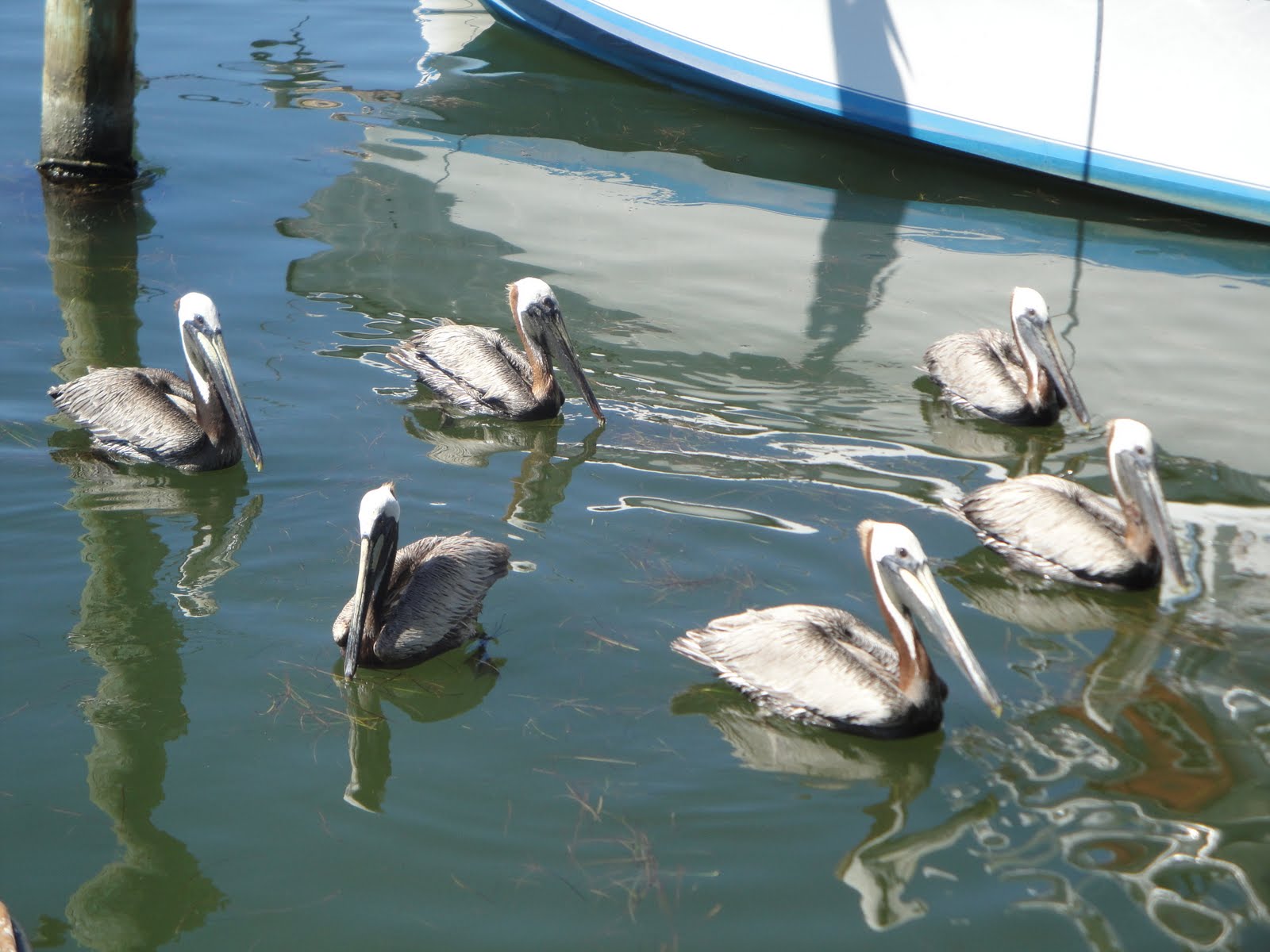
Species # 101 - Brown Pelican (Pelecanus occidentalis)


Species # 102 - Adam's needle (Yucca filamentosa)

 Not pictured: Species # 103 - American beachgrass (Ammophila breviligulata)

This brings me to a final count of 103 species: 58 plants, 23 birds, 11 mammals, 5 fungi, 4 insects, and 2 reptiles. "Final" is a bit of a lie, because I do intend to keep adding to this list as I continue to cycle and to explore the natural world. The marriage of  these two hobbies has been too great an experience to discontinue simply because I reached an arbitrary milestone.

7/17/11

Hike from the New Digs

Most folks reading this already know, but I moved a few weeks ago. It wasn't far, so exploring the neighborhood is really more a matter of seeing the same neighborhood from a slightly different perspective. Still, it's been interesting seeing nature from this new vantage point. I have an altered bike route to work, the grounds of the new apartment are landscaped differently, and the surrounding area is a little more residential. I'm still close to most of the same parks and green spaces, and yet the slight shift in perspective seems to have shaken up my mindset enough that different details stand out.

I noticed this last weekend when taking my first long hike from the new base of operations. It wound through some of the same areas of Rock Creek Park I have blogged about before. I returned up the same section of East-West Highway I used to live on. Yet this hike was different than any previous ones in terms of which living things stood out to me. The next day I took an out-and-back bike ride along Sligo Creek Trail - a ride which allowed me to add about ten new species to my Naturalism on Speed challenge. It's been quite a while since I added more than two or three after a single ride.

A flowering plant along Portal Drive was the first new thing to draw my attention. Its leaves were shaped like a child's drawing of a Christmas tree, and its small flowers ranged from pale violet to white. It had a row of spines along the stem, and these occurred in pairs opposite one another. These spines were also present on the underside of the leaf. (Wow! Typing this paragraph has reminded me just how much plant life review I need if I want to appear knowledgeable. I just don't have the biological vocabulary to be precise.) I've no idea what this plant might be, so if anyone can ID it from the photo below please leave a comment.


Mystery Plant #1.

The next "new" thing I noticed is probably best explained by a picture. It's something I see all the time, but last weekend was the first time I thought it might make a nice photo.


This is a reminder that oyster mushrooms are appetizing to more than just humans. Also, it's hard to tell from this photo but that was one enormous slug.

Mystery plants were a theme of the day. Number two was a ground-covering plant lining much of the trail through the park. I see this plant often but until lat weekend my mind filed it as part of the background, and therefore not an item of interest. It had a long whiplike flower and large leaves relative to the overall plant size. Once I noticed it I saw that it was quite prevalent throughout the northern section of the park. Again, if you have any clue as to this one's identity from the photo below please let me know!


Mystery Plant #2

It was while climbing THE HILL on the way back that I collected my one big mushroom find of the day. This was a large patch of Chlorophyllum molybdites, sometimes known as the green-spored parasol since *dramatic pause* it looks like a parasol mushroom and has green spores. This mushroom is an old friend and among the first handful I learned to reliably identify. The "new" of this encounter was that I hadn't before considered the narrow strip of grass between the main lanes of East-West Highway and the access road as fertile ground for a mushroom search. Looking back, though, these aren't the first mushrooms I've seen there.


Franklin didn't care one bit about the mushrooms, but it sure looks like he's proud of something here, doesn't it?

This brings me to my final mystery plant (well, there was a mystery tree as well but I didn't take any pictures). This plant was enormous for a non-woody plant. It stood easily eight feet high, and likely closer to ten. Its leaves were each larger than my head. I can't really think of any identifying features other than its size, so I'll just show you. If you know what this thing is, you know what to do.


The leaves of Mystery Plant #3
 
  
Mystery Plant #3 in all its monstrous glory.

Coming down the home stretch of the hike, I started seeing a plant I'm familiar with but had never really noticed in Silver Spring: pokeweed. This stuff has berries that start as white flowers which turn green and then a deep, nasty-staining purple. I'm confident enough that the species is American pokeweed (Phytolacca americana) that I counted it in my little challenge when I saw more of it the next day.


Pokeweed in the green (and thus not yet fatal to garments) stage.

I guess the takeaway from last week's experience is that however familiar I think I am with the natural environment, there's always something there I hadn't noticed before. Whether my move had anything to do with my shift in perception is immaterial - what matters is that the diversity of life is great enough to continually provide new surprises.

6/12/11

Species Feature #8, Train Wrecker

The train wrecker is a fascinating mushroom, technically an edible but not particularly palatable. I'll get the story of its common name out of the way quickly rather than keep you in suspense. This mushroom has reportedly decayed railroad ties to such a degree that accidents have resulted. These stories, however, may be apocryphal - after all, a number of other organisms were undoubtedly at work on each of the ties in question. Mature specimens can be quite large and showy, and their brown scales, jagged gills and inrolled cap margins can give them a rustic appearance. The stems, too, contribute to this rugged feeling with their often shaggy rings and reddish-brown scales. The size makes this mushroom a tempting kitchen experiment, but it has a tough, leathery texture which prevents it from being truly appetizing.


An immature specimen harvested from a decaying stump. Note the gills' attachment to the stem, and their already ragged nature. The scales on the stem are also readily apparent.

Neolentinus lepideus Quick Facts

Common Name(s): train wrecker, scaly lentinus

Taxonomic Breakdown:

  • Kingdom - Fungi
  • Subkingdom - Dikarya
  • Phylum - Basidiomycota
  • Subphylum - Agaricomycotina
  • Class - Agaricomycetes
  • Order - Gloeophyllales
  • Family -Gloeophyllaceae
  • Genus - Neolentinus
  • Species - lepideus

The genus of this mushroom used to be Lentinus, but as with many fungi these days this has recently changed.

Range:  This mushroom is common throughout North America and Europe. It can be found growing on decaying coniferous wood and occasionally on hardwood as well. It has even been reported in coal mines.


A mature specimen, with a bit of substrate (the thing it grows on and consumes) brought along for good measure.

Here is a closeup of the gills and cap margin in a mature specimen. This one was found deep in Rock Creek Park alongside a picnic table.

It is not recommended to eat this mushroom if collected growing from treated wood - unpleasant substances like the chemicals used for weatherproofing can be taken up in the fruiting body as it grows. I personally don't recommend eating this at all due to its general mediocrity. In Michal Kuo's 100 Edible Mushrooms, Darvin DeShazer quotes another mycophagist, Robert Mackler, thusly: "If it's not at least as good as a portobello, why eat it?" I don't agree fully with this fourth-hand thought (the answer is "because it's cool," or maybe "to find out what it tastes like," etc.). However, having tasted this species I am inclined to agree in this instance. Of course, it isn't recommended to eat ANY wild mushroom at all without extensive knowledge and experience... so keep that in mind as well. If you see a mushroom that looks like the above, the reward side of the risk-reward balance is very small.

6/8/11

It's Hot (A Cautionary Post)

It's summer! Don't give me this Summer Solstice crap, here in the DC area we know better. Early June, and we're flirting with trip-digits out there. If you're new to the area and reading this, you are hereby warned: over the next three months, you will be seeing this. Often. Wait, though... why am I griping about the heat on a blog about naturalism? Well, apart from the obvious fact that most of naturalism happens outside (you know, where all that heat is) hydration is a matter of tremendous importance for anyone doing anything outside in heat like this.


You may think (and you'd be right) that hiking or strolling is a lot less strenuous on your body than playing sports, running, "working out," etc. However, one is also less likely to notice when one is becoming dehydrated during this lower-impact activity. My goal today is to convince anyone reading this to consider hydration - and to take it very seriously - when doing whatever it is you do in nature. Much of this is common sense, but it is good practice to occasionally sit and think about common sense. Why is it common, and why is it sense?


Hydration begins before you do.

What do I mean by that load of BS? You need to be hydrated before you go outside and start your activity. Did you have three cups of coffee this morning? If so, you'd better down a glass or two of water before you get going. Whatever your morning diet, you should really consider drinking a significant volume of water before you leave the comfort of your A/C.

Take more than you think you need.

No translation needed for this one. Whatever your estimate of water needs, bring more. If you're driving somewhere, leave excess in the car. If you don't think you can carry it, find a way. Make room.

Plan your refills.

If your trip is long, make sure you begin it with an idea of where and when you will encounter fresh water sources. Then, take advantage of them. Even if you're "ahead of the curve" it doesn't hurt to top off your supply. You may want to consider purification tables if you're depending on streams, springs, etc.

Sip, don't guzzle.

If you don't listen to this one, you will learn why.

Over-hydration can happen...

...but it generally doesn't. It takes something extreme. If you're worried about it, bring some electrolytes with you (in whatever form you choose). Again, this is rare but needed to be mentioned.

If you feel dehydrated, it's too late.

Take this one to heart. You should drink regularly throughout your activity. It's best to take in liquid before you even feel thirsty, though again, there's no need to guzzle. If you do get to the point of feeling dehydrated (headaches, lack of concentration, general wooziness, etc.) make sure that you rest until you feel better. Then rest a bit more. If you start moving and feel bad again, you haven't rested enough or taken in enough water.

Hydration doesn't stop when you stop.

We've come full circle. Keep drinking water when you get home. You don't have to take this to an extreme, but just because you've ceased your activity doesn't mean your body has finished using and shedding water.


Before I leave you, I want to leave a final note to dog owners. Be careful with your pets. However awesome your dog is, he or she cannot manage heat as well as you can. I'll let Franklin's vet do the heavy lifting on this one, but be warned. Dogs have limited ability to release heat, and they're such loyal creatures that they will literally walk or run themselves to death to keep up with you.

This is perhaps a more appropriate setting for our four-footed friends in this type of weather.

5/22/11

Century Ride

Well, I don't want to spend much time bragging about accomplishments on this blog - that is quite a departure from the point. However, since yesterday's bike ride was a) a monumental event in my life and b) relevant to several things I've talked about here, a post about it is almost necessary. The event was the CASA River Century, a bike race of 103.5 miles to benefit the Court-Appointed Special Advocate program of West Virginia's Eastern Panhandle. My coworker, neighbor and friend Dustin talked me into it, a job made easier for him since the route ran right through my hometown and past many childhood memories. Though it took the equivalent of a work day, we finished and did so with dignity.

Thanks to our cheering section, who spent the day in Shepherdstown waiting for us to pass and then finish. This photo was taken after 55.4 miles.

Dustin has kept a blog about the whole process (and sandwiches!) I recommend it, but only if you like sandwiches. (If you don't, I recommend some soul-searching. Seriously, how can you dislike something as broad as "the sandwich"?) It certainly captures the idea of just how much of our lives became devoted to this race over the last two-plus months.

From the perspective of this blog, yesterday's race represented the end of part one of my personal challenge, Naturalism on Speed. With my mind so focused on the race itself (the term "race" is used loosely. No one kept time, and riders were not monitored except for safety) I was only able to add four species to the list. These were: common sorrel, striped skunk (carcass), eastern chipmunk, and common sulfur (butterfly). Over 100 miles, I am sure I missed quite a number of species I could have easily nabbed - but, having already cleared my goal by a wide margin it wasn't much of a priority. I did see one additional creature which I was very tempted to count, but I am not confident enough in my fleeting glimpse. A brilliant blue bird flew across my path - too small to be a blue jay but too dark to be an eastern bluebird. My assumption was that this bird was an indigo bunting, but after consulting some guides I realized that there are somewhere between three and six species I could have been seeing. I still think my gut instinct was right, but counting this would violate my own rules.

Sorrel (Rumex acetosa) happens to be the only member of the above list that I have a photo of. Thanks to Laurel for reminding me what this is.

Having never attempted a feat of endurance like this race, it became as much a learning experience as it was a test of my physical limits. What I discovered is that as you near your tolerance levels, it is your mind that can take the strongest hit. I don't know if this is backed up by medical science, but it seemed as if my body could only maintain so many things at that point. Almost every bit of energy it could assign to my brain was used to keep me breathing and to keep sending the necessary instructions to my legs. I found myself doing things like looking at the ground and nearly riding right off the road toward the end. Thinking straight was a real exertion of will. What surprised me most, however, was how little time the exhaustion lasted. After some food and a shower, I felt no worse than I did after our longest training rides, which were between 70 and 80 miles. I guess what that means is that we trained more or less properly.

I don't want to go on and on about this thing, so I'll wrap it up. Suffice it to say that this was a great personal achievement for me, one I'm happy to be able to include in my bragging rights folder. That it was something I could do outside while observing nature is quite a bonus.

5/5/11

Bike Commuting

The first thing one needs for a bike commute. This happens to be where mine starts.

Commuting via bicycle has been a drastic game-changer in my adult life. There are of course real naturalist's reasons for doing so: cutting your emissions, sticking it to Big Oil, getting out into nature, and so forth. Those were some of my reasons for doing it. But really, my reasons were primarily a lot more selfish. It saves money in the long run, it forced me to get into better shape, and it's just plain fun. The benefits surprised me though - I feel better. I'm less often tired. I'm more alert, and hence better at my job. It makes me crave a better diet (well, most of the time). Finally, if you live here you know how much driving around DC sucks. You know how, no matter one's intentions, most of us pick up horrendous driving habits almost as a set of survival skills and thus contribute to the problem. Where I'm going with this is: I hate my commute so much less. Bike commuting has become a great stress-reducer.

I'm not telling you to (yes I am) start commuting (do it) by bicycle. What I am (are you cycling yet) doing is pointing out that if you live in the DC suburbs it is probably an option for you (get on that bike) even if you think it's not. Take my commute for instance. It begins near Downtown Silver Spring and ends, about ten miles later, in Rockville near Randolph Road. Before my friend Dustin told me about it, I wouldn't have thought there was a straightforward bike route between these two places. Yet, almost all of my ride is on the paved Rock Creek Trail. The Maryland 'burbs are full of these trails: The Millenium Trail, The Matthew Henson Trail, The Capital Crescent Trail and Georgetown Branch Trail (which is more or less complete on both ends, despite mapped appearances), are just a few. Virtually all of the roads in and around Potomac are extremely bike-friendly. If that's not enough, organizations like Bike Arlington and WABA will get you started.

OK, all jokes aside I'm not here to instruct anyone on how to live their lives. If biking isn't for you then it just isn't. But, if you're reading this and have ever considered it, I urge you to consider further, and I hope that I have helped make your decision easier. The rest of what I want to share today is simply a series of photos chronicling one day (today) of biking to work. I hope they will be enticing.

This photo doesn't do it justice, but this is what my coworker and I have come to refer to as THE HILL. In the morning this is a pleasant boost of speed; in the evening it's a last hurdle to clear before showering.

Here the path disappears under Connecticut Avenue. Believe me, this is better than the alternative.

...like this truck full of shit.
As with any form of transportation, however, there are just some days when something completely unexpected holds you up.

Here I'm nearing the end of the bike path (well, for me). Occasionally I take the road you can see here - Beach Drive - instead. It's more dangerous but faster... and traffic here generally knows what's up with the bicycles.

This is the only horrendous intersection (well, aside from the one just outside my apartment) that I must deal with. It's not so bad, though - one just has to wait for the light.

I will finish with some uncaptioned photos from the return trip. Enjoy!


5/3/11

Naturalism on Speed: The Challenge

I've decided to turn a previous post here into a personal challenge. I recently began updating this post every time I came across a new species while cycling, and decided to turn this into a bit of a game. The longer my list grew, the more I found myself squinting at everything I passed, striving further and further to coax identity from animals and plants alike. I've set the arbitrary but (I hope) reachable goal of fifty successfully identified species before the end of THE BIG RIDE which is happening at the end of this month. I've also decided on a second challenge: an even hundred by the end of this year.


The Rules

No challenge is complete without a set of rules, and this will be no exception. This isn't just a test to see how many species can be found in this area, or to prove how much diversity abounds. This is a test of observational skills as well.

Rule #1: Only animals, plants, and fungi (read: macroscopic life) which can be identified with certainty may be counted. None of this "well, that looked like a ________" business. For example: I have passed several sumacs - and known that they were sumacs - but since several sumac species occur in this region and I can't tell with my naked eye while passing at 15-20 mph which is which, I have omitted them from my list. That said, if only the merest shred of doubt as to a specimen's identity can be raised, I will count it.

Rule #2: Species are eligible for this list only if they can be identified without making any "unnatural" stops. A "natural" stop is one which must be made for the purposes of the ride only. Reasons for such a stop include but are not limited to: traffic signals, bicycle maintenance, checking directions, nutritional intake, and waste evacuation. Since the spirit of this exercise is rapid identification, stopping to literally smell the roses is not allowed. Nor is stopping to fondle the trees, collect the mushrooms, gawk at the squirrel, etc.

Rule #3: Retroactive identification is not allowed, except for refining information I already possess. In other words, I have to know what I'm seeing when I see it (at least a common name, and vague things like "maple" or "frog" don't count). This doesn't mean that I can't research and build my knowledge base between rides, but if I find something in a guide and think "oh, so that's what that was!" I cannot count it unless I see another specimen on a later ride. Here's an example in practice of one I did count: I knew that a flower I was seeing was called fleabane, and I noticed that some patches were very pink and others almost pure white. When I got home, I discovered that "common fleabane" and "daisy fleabane" are separate but related species. This I consider refining. If, however, I thought "oh, that thing looks like daisies but isn't...I wonder what it is," and then looked it up, that would be right out.

Rule #4: Humans, dogs, cats, horses, cows, goats, sheep, chickens, and any other domesticated animals do not count. I specify those eight because I have seen all of these on one ride or another...but this rule extends to iguanas, ferrets, spider monkeys (you get the idea). Plants in planters or obviously landscaped (private) gardens do not count; however, plants in a park or other public space which were obviously planted by humans do count. I may regret this rule if I come up eight or fewer species short of either goal, but identifying pets and livestock isn't really in the spirit of what I'm trying to do.

Rule #5: No, there will be no draft. This rule simply states that any specimen that can be seen from my apartment, place of employment, or other frequented locale are not fair game. This is to prevent pseudo-accidental cheating, in which I ride past the white ash trees in my apartment complex and pretend I really could tell in passing that that's what they are. The species as a whole are not excluded from the game, but I must find a specimen elsewhere, and ID it from the bicycle, in order for it to make the list.


I didn't cheat and count this deer - believe me, I've seen plenty.


The List

I will copy the list so far here. Before this morning's epiphany and formal self-challenge, it stood at twenty species.

This was not taken while biking, but does feature a couple of species listed below.


  • Vulpes vulpes (red fox)
  • Odocoileus virginianus (white-tailed deer)
  • Ardea herodia (great blue heron)
  • Sciurus carolinensis (eastern gray squirrel)
  • Sylvilagus floridanus (eastern cottontail)
  • Aquila chrysaetos (golden eagle)
  • Turdus migratorius (American robin)
  • Castor canadensis (North American beaver)
  • Cardinalis cardinalis (northern cardinal)
  • Mimus polyglottos (northern mockingbird)
  • Phalacrocorax auritus (double-crested cormorant)
  • Anas platyrhynchos (mallard)
  • Procyon lotor (raccoon)
  • Branta canadensis (Canada goose)
  • Marmota monax (groundhog, woodchuck) added 4/30/11
  • Spinus tristis (American goldfinch, eastern goldfinch) added 4/30/11
  • Taraxacum officinale (common dandelion) added 4/30/11
  • Didelphis virginiana (Virginia opossum) was deceased, so maybe it shouldn't count. added 4/30/11
  • Podophyllum peltatum (mayapple)  added 4/30/11
  • Toxicodendron radicans (poison ivy) added 4/30/11

The continually updated list, from today until the end of the challenge, follows. Today was a heck of a day because I put so much thought into this.

Lamb's ear

  • Zenaida macroura (mourning dove, rain dove, western turtle dove) added 5/3/11
  • Lonicera japonica (Japanese honeysuckle) added 5/3/11
  • Robinia pseudoacacia (black locust, false acacia) added 5/3/11
  • Pinus strobus (eastern white pine) added 5/3/11
  • Cornus florida (flowering dogwood) added 5/3/11
  • Parthenocissus quinquefolia (Virginia creeper) added 5/3/11
  • Platanus occidentalis (American sycamore) added 5/3/11
  • Liriodendron tulipifera (tulip poplar, yellow poplar, tuliptree) added 5/3/11
  • Conopholis americana (bear corn, American cancer-root, squawroot) added 5/3/11
  • Trifolium repens (white clover) added 5/3/11
  • Typha latifolia (common cattail) added 5/3/11
  • Pleurotus ostreatus (oyster mushroom) added 5/3/11
  • Erigeron annuus (daisy fleabane) added 5/3/11
  • Erigeron philadelphicus (common fleabane) added 5/3/11
  • Liquidambar styraciflua (American sweetgum, redgum) added 5/5/11
  • Picoides pubescens (downy woodpecker) added 5/5/11
  • Juglans nigra (eastern black walnut) aded 5/5/11
  • Sturnus vulgaris (European starling, common starling) added 5/5/11
  • Quiscalus quiscula (common grackle) added 5/7/11
  • Papilio glaucus (eastern tiger swallowtail) added 5/7/11
  • Stachys byzantina (lamb's ear) added 5/7/11
  • Chrysemis picta picta (eastern painted turtle) added 5/7/11
  • Ulmus rubra (slippery elm) added 5/7/11
  • Acer saccharinum (silver maple, white maple, water maple, etc) added 5/7/11
  • Ondatra zibethicus (muskrat) added 5/7/11
  • Ardea alba (great egret) added 5/7/11
  • Cercis canadensis (eastern redbud) added 5/7/11
  • Pieris rapae (cabbage white, small white [butterfly]) added 5/7/11
  • Corvus brachyrhyncos (American crow) added 5/7/11
  • Polyporus squamosus (dryad's saddle) added 5/10/11
  • Glechoma hederacea (ground ivy) added 5/10/11
  • Potentilla indica (mock strawberry, Indian strawbeery) added 5/12/11
  • Ilex opaca (American holly) added 5/14/11
  • Acer rubrum (red maple) added 5/14/11
  • Acer palmatum (Japanese maple) added 5/14/11
  • Coragyps atratus (black vulture) added 5/14/11
  • Acer platanoides (Norway maple) added 5/14/11
  • Trifolium pratense (red clover) added 5/14/11
  • Cathartes aura (turkey vulture) added 5/14/11
  • Coluber constrictor (black racer) another deceased specimen - but count it! added 5/14/11
  • Trifolium dubium (least hops clover, yellow shamrock) added 5/14/11
  • Silene latifolia (white campion) added 5/14/11
  • Rumex acetosa (commen sorrel, garden sorrel) added 5/21/11
  • Tamias striatus (eastern chipmunk) added 5/21/11
  • Colias philodice (clouded sulfur, common sulfur) added 5/21/11
  • Mephitis mephitis (striped skunk) one more deceased specimen - added 5/21/11


Goal 1 reached; 51 species as of May 10th! This is great news, as it gives me an opportunity to hopefully clear the mark by a wide margin. I'll feel a lot better about, say, 62, than 51. I want that cushion in the event of a mistake or two...I'm trying to be careful but I'm probably not above deceiving myself on one or two species.

My training partner, Dustin, and I pause for a photo 55 miles into our century ride.


With the added entries of 5/21/11, the date of part one of this challenge has come and passed. I have exceeded my goal by sixteen species, coming in at 66, which is a solid two-thirds of the way to my second goal. I will say that this is becoming increasingly difficult, as the number of species easily identified while riding dwindles with each new addition to the list. I will need to continue to brush up on my flowers and trees in the coming months if I am to identify 34 additional species this year.

It's time to break this thing up - that list above is getting to be a bit of an exercise for the scroll-wheel finger. There is not yet a ton to add, but as above it has to start somewhere. I'm starting to get a "bucket list" of species that I just can't believe I haven't picked out yet. Maybe that'll be the next challenge?


The train-wrecker mushroom, so named because it is wont to grow on railroad ties and weaken or destroy the wood.
 
  • Iris pseudacorus (yellow flag) added 5/23/11
  • Quercus alba (white oak) added 5/23/11
  • Panaeolus foenisecii (mower's mushroom) added 5/23/11
  • Coprinus comatus (shaggy mane mushroom) added 5/26/11
  • Daucus carota (Queen Anne's lace) added 5/26/11
  • Neolentinus lepideus (train wrecker) added 6/1/11
  • Quiscalus major (boat-tailed grackle) added 6/1/11
  • Morus alba (white mulberry) added week of 6/13/11
  • Morus rubra (red mulberry) added week of 6/13/11
  • Fraxinus americana (white ash) added week of 6/13/11
  • Persicaria perfoliata (mile-a-minute) added week of 6/13/11
  • Carya laciniosa (shellbark hickory) added week of 6/13/11
  • Hedera helix (English ivy) added week of 6/13/11
  • Alliara petiolata (garlic mustard) added week of 6/13/11
  • Cichorium intybus (common chicory) added week of 6/13/11
  • Cucumis sativus (cucumber) added 7/5/11
  • Dumetella carolinensis (gray catbird) added 7/5/11
  • Plantango lanceolata (English plantain) added 7/5/11
  • Asclepias syriaca (common milkweed) added 7/7/11
  • Hybiscus syriacus (rose of Sharon, shrub althea, rose althea) added 7/7/11
  • Agelaius phoeniceus (red-winged blackbird) added 7/8/11
  • Columba livia (pigeon, rock dove, rock pigeon) added 7/10/11
  • Salix babylonica* (weeping willow) added 7/10/11
  • Sassafras albidum (sassafras, white sassafras, red sassafras, silky sassafras) added 7/10/11
  • Phytolacca americana (American pokeweed) added 7/10/11
  • Aesculus flava (yellow buckeye) added 7/10/11
  • Persicaria maculosa (lady's thumb) added 7/10/11
  • Hemerocallis fulva (daylily, tiger daylily, orange daylily) added 7/10/11
  • Campsis radicans (trumpet creeper) added 7/10/11
  • Sphecius speciosus (eastern cicada killer) added 7/10/11
  • Albizia julibrissin (silktree, bastard tamarind, Lenkoran acacia) added 7/10/11
  • Ginkgo biloba (Ginkgo) added 7/15/11 
  • Leucophaeus atricilla (laughing gull) added wk of 7/24/11
  • Uniola paniculata (sea oats) added wk of 7/24/11
  • Pelecanus occidentalis (brown pelican) added wk of 7/24/11
  • Yucca filamentosa (yucca, Adam's needle) added wk of 7/24/11
  • Ammophila breviligulata (American beachgrass) added wk of 7/24/11

*"weeping willow" is actually a cultivar of Salix babylonica and one of two other species. I didn't make a rule for handling cultivars, and I know what it is, so I'm counting it.
 
New species from most recent edit: 5
Running Total: 103
Animals: 40 (11 mammals, 23 birds, 4 insects, 2 reptiles)
Plants: 58
Fungi: 5